Technical · 7 min read
How net-metering works in India, and what changes by state
A plain-English guide to net-metering for rooftop solar in India: the bidirectional meter, the DISCOM application, net vs gross metering, and the settlement rules that differ from state to state.
Net-metering is the reason a grid-connected rooftop solar system pays for itself. Without it, every unit your panels produce while you are out at work would simply be wasted. With it, those units are credited against the power you use at night.
The basic idea is the same across India. The details (how much you can install, how credits are settled, what happens to surplus units) are set by each state’s electricity regulator and implemented by your local DISCOM. Here is how it works, and what to check for your state.
The basic idea
A rooftop solar system produces most of its power between mid-morning and mid-afternoon. Most homes use most of their power in the early morning and evening. Net-metering bridges that gap by using the grid like a bank:
- When your panels produce more than your home is using, the surplus flows out to the grid.
- When your home needs more than the panels are producing, power flows in from the grid.
- A bidirectional meter records both directions.
- At the end of each billing cycle, you are billed for the net units: imports minus exports.
If you exported 300 units and imported 450 in a month, you pay for 150 units, plus any fixed charges and duties that apply.
The bidirectional (net) meter
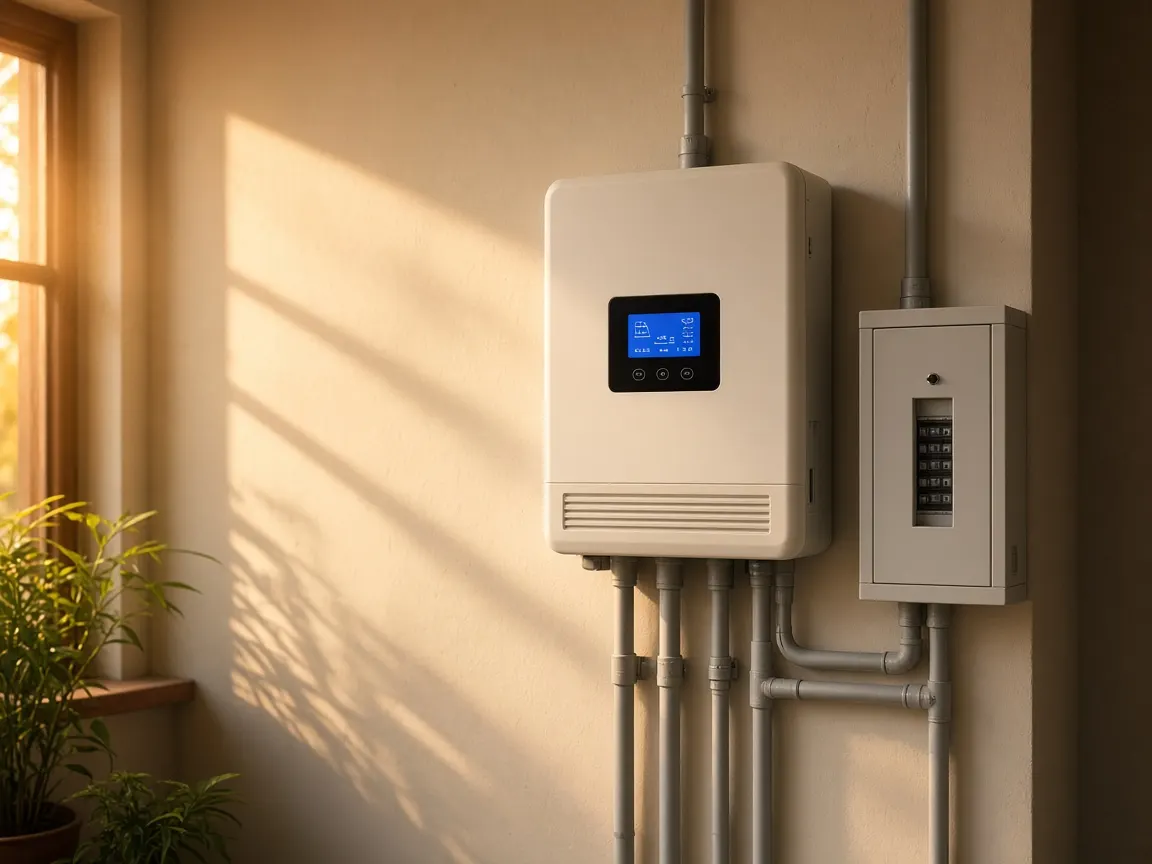
Your existing meter only counts units coming in. For net-metering, the DISCOM replaces it with a bidirectional meter that records import and export separately. In many states this is now a smart meter.
Depending on your DISCOM, you may pay for the meter, or it may be supplied as part of the process. Some DISCOMs also require a separate solar generation meter that records the total output of your panels.
The meter is the DISCOM’s property and responsibility. Your installer should not be fitting it themselves.
How you apply
The exact steps and portal vary, but the sequence is broadly similar everywhere:
- Application. You (or your consultant) apply for a rooftop solar connection with net-metering. For homes using the PM Surya Ghar scheme, this runs through the national portal, which routes the request to your DISCOM.
- Technical feasibility. The DISCOM checks whether the local transformer and your sanctioned load can accommodate the system size you have requested.
- Installation. Once feasibility is approved, the system is installed by the vendor. Installing before approval can cause problems with both net-metering and subsidy.
- Meter installation and inspection. You submit the installation details, the DISCOM installs the bidirectional meter and inspects the system.
- Commissioning. After a successful inspection, the system is commissioned and net billing starts from your next cycle.
Delays usually come from incomplete documents, a mismatch between the name on the electricity bill and the applicant, or transformer capacity limits in your area. These are worth checking at the start.
Net metering vs gross metering
These two terms are often confused.
- Net metering: your solar power is used in your home first, and only the surplus is exported. You are billed on the net difference. This is the standard arrangement for homes.
- Gross metering: all the power your panels produce is exported to the grid and paid for at a fixed feed-in tariff, while all your consumption is billed at the normal tariff. It’s more common for larger or commercial systems in certain states and schemes.
Some states also have net billing (or net feed-in), where exported units are valued at a different rate from imported units rather than being offset unit for unit. That changes the economics, because self-consumption becomes more valuable than exporting.
What changes from state to state
This is where you need to read your own state’s current regulations, because these rules differ and they are revised from time to time.
Maximum system size
Most states cap rooftop capacity relative to your sanctioned load (sometimes at 100% of it, sometimes with other limits), and set an overall cap per connection. If your ideal system is bigger than your sanctioned load allows, you may need to apply for a load enhancement first.
Settlement period
Credits for surplus units are usually carried forward from month to month. At the end of a settlement period (often the financial year, though it varies), any remaining surplus is either paid out at a rate set by the regulator, carried forward, or lapses. The rate paid for surplus is typically much lower than the retail tariff.
Banking charges and other charges
Some states apply banking charges, wheeling charges or other fees to exported energy, especially for commercial and industrial consumers. Residential consumers are often exempt, but not always.
Category differences
Rules for residential, commercial, industrial and agricultural connections can be quite different, even within the same state. Housing societies and group housing may have their own provisions.
Time-of-day tariffs
Where time-of-day tariffs apply, the value of a unit depends on when it is used or exported. This can make a battery or a shift in usage more valuable than it would otherwise be.
What this means for sizing your system
Because surplus units at the end of the settlement period are usually paid at a low rate, it rarely makes sense to build a system that produces much more than you consume over a year. The sweet spot is a system sized to offset most of your annual consumption, within your sanctioned load and your state’s caps.
This is why we always start with twelve months of bills, not one. Your summer and winter consumption can differ a lot, and so does your panels’ output.
Checklist before you apply
- Is your electricity connection in the name of the person applying?
- What is your sanctioned load, and does the system you want fit within your state’s limit?
- Does your DISCOM currently offer net metering, net billing or gross metering for your category?
- What is the settlement period, and how are leftover credits paid?
- Are there any charges on exported energy for your category?
- Who supplies the bidirectional meter, and at what cost?
Your DISCOM’s website and your state electricity regulatory commission publish the current regulations. Rules do change, so check the latest version before you sign anything, or ask us to check it for you as part of a free consultation.
Talk it through with a consultant
Straight answers on WhatsApp, or a free call at a time that suits you.