The starting point
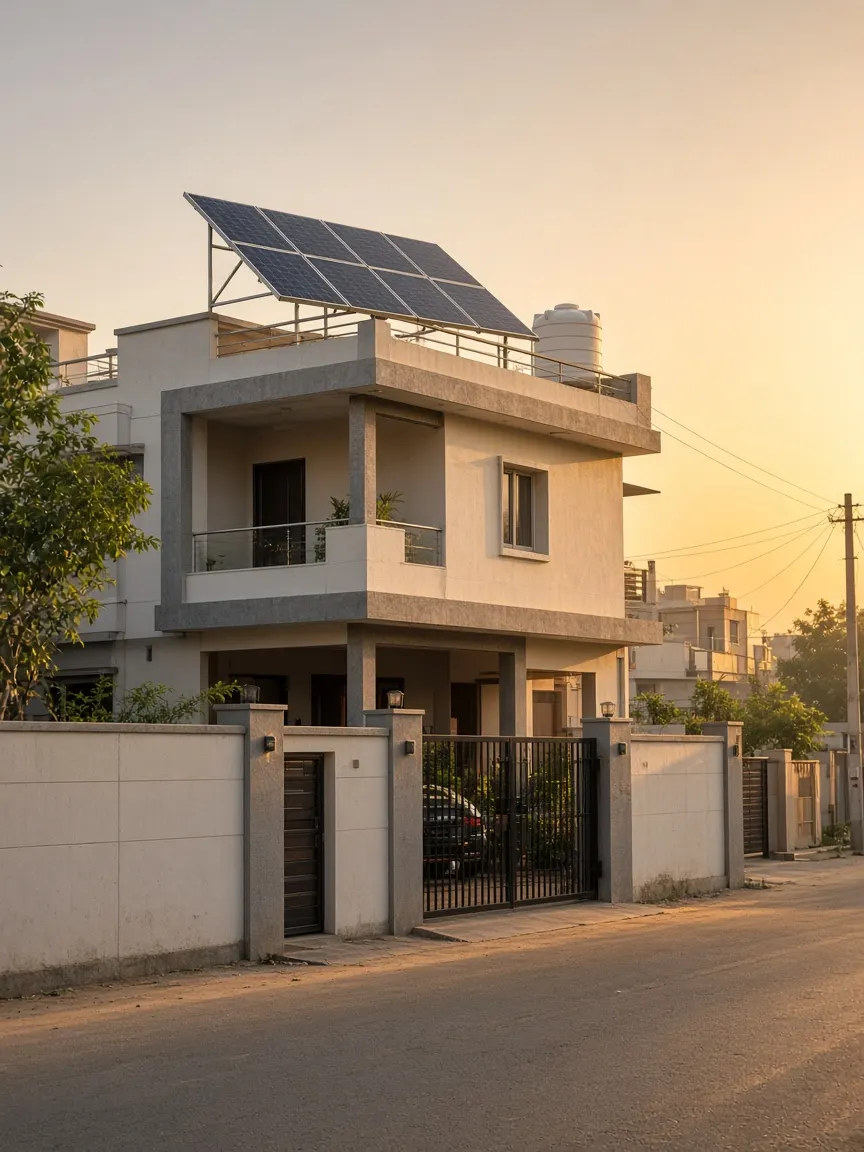
A family on a JBVNL domestic connection pays about ₹4,300 a month, roughly 570 units at a blended ₹7.5 per unit. The flat RCC roof has about 600 sq ft free of shade once the water tank and stair room are accounted for.
How we size it
In Jharkhand a well-installed system generates about 3.9 units per kW per day, so 5 kW gives around 585 units a month, enough to cover the household’s use without oversizing. Ten 550 W panels need about 500 sq ft, which fits the roof with room for walkways and cleaning.
| Estimate | |
|---|---|
| System cost before subsidy | ₹2.75–3.5 lakh |
| PM Surya Ghar central subsidy | ₹78,000 |
| Net cost to the family | ₹1.97–2.72 lakh |
| Monthly saving | about ₹3,650 |
| Simple payback | about 5 to 6 years |
What the bill looks like after
Solar offsets the energy charges, but fixed charges, meter rent and duty stay. That is why the bill drops to about ₹650, not zero. Anyone promising a zero bill on a grid connection is skipping that line.
What we would do for this family
Survey the roof and structure, compare at least two installer quotes against one design, file the subsidy and net-metering applications, and supervise the installation against the design before sign-off.
Illustrative example built with the same assumptions as our solar calculator. Your numbers depend on your bill, roof and tariff.