The starting point
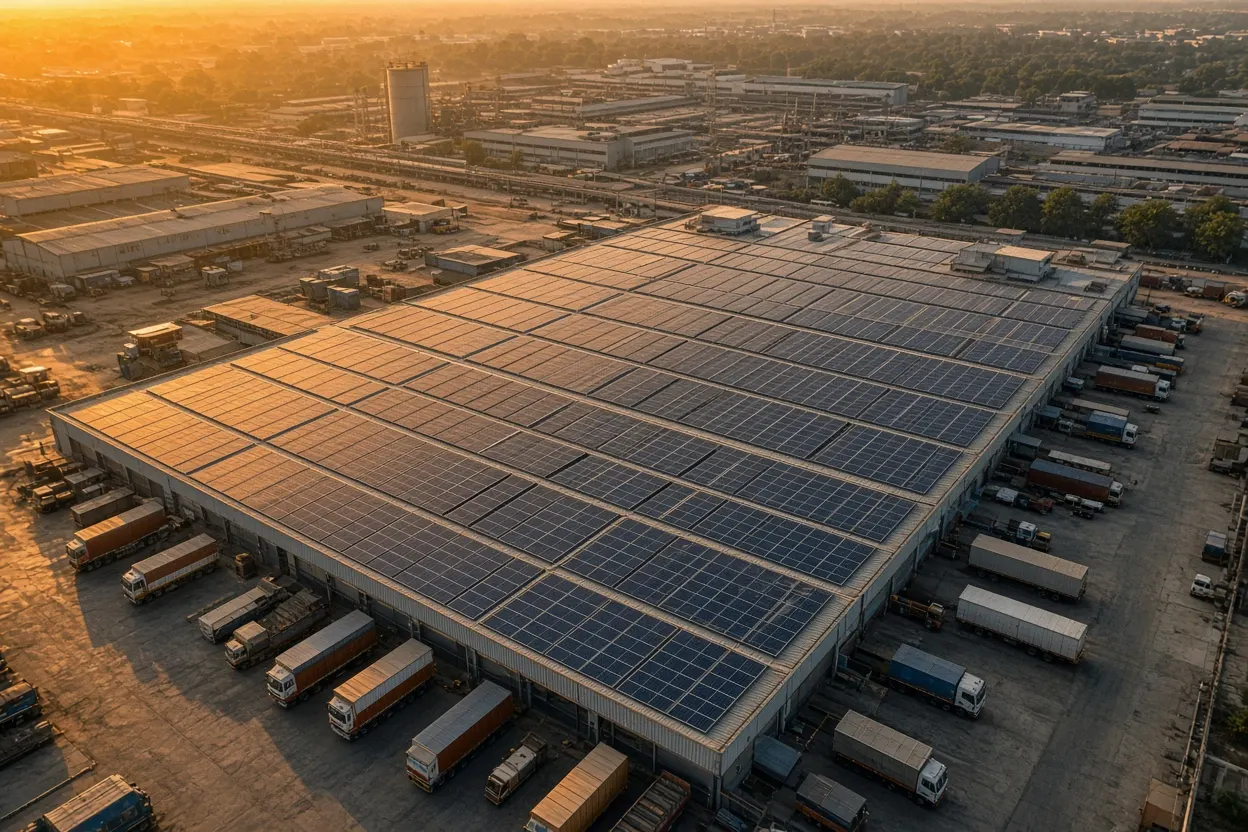
A single-shift manufacturing unit uses about 14,000 units a month at a blended ₹9.5 per unit, so its bill is around ₹1.33 lakh. Most of that load runs between 9 am and 6 pm, exactly when solar produces.
How we size it
At 3.9 units per kW per day, 120 kW produces about 14,000 units a month. The design checks three things before anything else:
- Roof strength: older tin sheds often need purlin reinforcement or a lighter mounting rail.
- Sanctioned load and net-metering limits: the DISCOM’s cap decides the maximum size, not the roof.
- Daytime match: solar used on site is worth the full tariff; exported units are worth less.
| Estimate | |
|---|---|
| System cost | ₹50–62 lakh |
| Capital subsidy | None for commercial and industrial users |
| Monthly saving | about ₹1.13 lakh |
| Simple payback | about 4 to 5 years |
Businesses can usually claim accelerated depreciation on solar assets; check the current rate with your CA.
What the bill looks like after
Fixed and demand charges remain, so the bill falls to about ₹20,000 a month, not zero.
Illustrative example built with the same assumptions as our solar calculator. A real design starts with 12 months of bills and a structural check.